
Did you know sometimes drug discount cards are not always the best way to reduce spending? Yeah, we were just as shocked!
It’s true that drug discount programs can help clients reduce out of pocket spending on some medications. But for clients with an active Medicare or Affordable Care Act (ACA) plan, they’re not always the best solution for savings.
That’s because it’s also true that these programs can create gaps in coverage or unexpected consequences if used incorrectly.
To help you decide when and when not to suggest drug discount programs to clients, we’ve broken down some of the most popular options!
GoodRx
GoodRx is perhaps the most well-known discount drug program. Beginning in 2011, it uses free, pre-negotiated coupons to provide individuals with lower-cost prescription drugs.
These savings come from a pharmacy benefit manager program that acts as a middleman between pharmaceutical companies and insurance companies.
GoodRx uses free, pre-negotiated coupons to provide individuals with lower-cost prescription drugs.
Their website allows consumers to compare prescription prices from more than 70,000 pharmacies, finding the most affordable options in their area. Your clients can take advantage of savings with GoodRx by:
- Comparing prices on their website or app
- Saving the applicable coupon.
- Presenting the coupon at the pharmacy at pickup.
Pros
Here are some of the pros for GoodRx for Medicare and ACA clients.
- Free, pre-negotiated coupons
- Allows clients to compare prices online
- Easy to navigate app and website
- Can be a great way for clients to save when a medication isn’t covered or the copay is higher
Cons
Despite savings and other advantages, there are still drawbacks to using GoodRx.
- Savings are not guaranteed as their health plan or other programs may save them more
- Cash purchases don’t count toward deductibles, out-of-pocket maximums, or Medicare TrOOP
- Prices can fluctuate daily or weekly
GoodRx could offer prescription savings for some of your clients, but there are other options to save on their medications.
Cost Plus Drugs
Cost Plus Drugs, led by Shark Tank’s Mark Cuban, is another option consumers have for reducing their out-of-pocket drug spending. Their savings are rooted in their mission to provide direct-to-consumer generic medications.
This program promises a savings of up to 80 percent by using their transparent pricing model:
- The cost of the medication
- An added 15% for program operations
- A pharmacy fee that is charged by the pharmacy partner
Cost Plus Drugs promises a savings of up to 80 percent by using their transparent pricing model.
To utilize savings from this partner, your client can browse their website to find their prescribed medication. Cost Plus Drugs has hundreds of generic drugs available on their platform.
To take advantage of savings, individuals will contact their doctor or pharmacy to send their prescription to the Cost Plus Drug pharmacy partner. Cost Plus Drugs’ pharmacy partner will fill the medication and ship them to beneficiaries or make them available at an affiliate pharmacy via the separate Team Cuban Card.
Pros
There are some advantages to using Cost Plus Drugs as a Medicare or ACA client:
- Shares a transparent pricing model that allows clients to understand what they’re paying for
- Offers significant savings (up to 80%) on many generic medications
- A great savings platform for clients taking common generic medications for diabetes, heart disease, mental health, or cancer
Cons
When encouraging clients to save with drug discount programs, take Cost Plus Drugs’ cons into consideration.
- Medications available are limited to generics
- Brand name and specialty medications aren’t available
- Requires prescriptions to be transferred and shipped if not local to an affiliate pharmacy, clients needing medication immediately might not be able to wait
Cost Plus Drugs could offer savings in some situations for your clients. Keep this drug discount program in your back pocket to share with those you service.
TrumpRx
The newest of the programs we’re covering, TrumpRx debuted in February 2026. Similar to GoodRx, TrumpRx works by offering pharmacy benefit manager-based discounts to consumers. Medications available on the platform and their manufacturers have agreed to “Most Favored Nation (MFN) Pricing.” MFN agreements are based on the premise that the U.S. shouldn’t pay higher prices for prescription drugs than the prices paid in other comparable nations
Medications available on the platform and their manufacturers have agreed to “Most Favored Nation Pricing.”
Your clients can access coupons on TrumpRx.gov and purchase medications directly through the platform, on a manufacturer’s website, or at a local pharmacy. Individuals will need a valid prescription to purchase medications. TrumpRx does not distribute prescriptions directly.
Pros
Compare other discount programs we mentioned with TrumpRx by taking into consideration the advantages.
- Offers “Most Favored Nation Pricing” on participating medications
- Clients can use coupons with either drug manufacturers or at local pharmacies
- Discounts on select brand-name prescriptions that don’t have generics (such as GLP-1 medications)
Cons
Like the other programs we mentioned, TrumpRx still has its own share of downsides.
- Formulary can be limited (only 40 medications available currently)
- Cash purchases, like those made with TrumpRx don’t count toward deductibles
- Coupons are not unique and are available from manufacturers or other discount program websites, encourage your clients to shop around for the best discounts
- Without legislation, it’s uncertain if discounts will have long-term viability
TrumpRx should not be considered a replacement for insurance but can be an affordable way for some clients to access medications when their insurance coverage is still too expensive.
Medicare Part D Limitations of Drug Discount Programs
Medicare Advantage and Part D clients can use drug discount programs, but with some limitations.
- Cash purchases (prescriptions purchased with discount drug programs) do not count toward True Out-of-Pocket limits (TrOOP).
- Pharmacies cannot submit pharmaceutical claims if a client initially pays via cash or a drug discount card. This can complicate the process if a client finds that purchasing a prescription through a pharmacy with insurance becomes more affordable than a drug savings program.
- Use of a cash-price program may cause a client to miss moving through coverage phases.
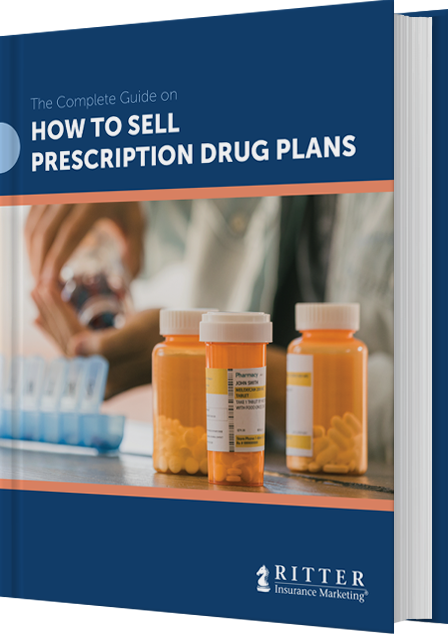
Learn more about Part D, coverage phases, and out-of-pocket maximums in our in-depth guide about selling prescription drug plans!
Be aware of these when advising a client if they have questions about how to reduce their drug spending, or if your client asks about any of the programs we’ve mentioned.
When a Drug Discount Program Can Be Useful with Medicare
There are some situations where a prescription medication discount program is beneficial for MAPD and Part D clients. For example, purchasing a generic medication through one of these programs may be more budget friendly than their health plan.
Purchasing a generic medication through a drug discount program may be more affordable than their health plan.
Additionally, not every plan covers every medication. Prescriptions not on a plan’s formulary may be cheaper with a discount card.
We recommend that you review your client’s medications and ensure all current medications are in their IntegrityCONNECT client profile so you can advise them in case there are specific drugs that may be more affordable through a cash discount program.
ACA Plans and Drug Discount Programs
Similar to your Medicare clients, your under 65 clients could also benefit from drug discount programs in some situations.
Clients could see great savings from GoodRx, Cost Plus Drugs, or TrumpRx in the following situations:
- A prescription is not covered by their plan
- A client hasn’t met their deductible
- The plan’s copay for the medication is still not affordable
A drug savings card is not always the best option for all medications or every client. Discuss options with your client and compare copays, as well as potential savings by using a pharmacy discount program.
When to Avoid Using a Discount Program with an ACA Plan
Be aware that drugs purchased using a prescription drug discount program do not count toward plan deductibles. This spending also does not contribute to the plan’s out-of-pocket maximum.
Additionally, these programs are separate from insurance coverage and therefore your client’s insurer will not have a record of the medication. This is important in the case of drug interactions, recalls, and other important notices from the plan.
If your client is close to meeting their deductible or out-of-pocket maximum, encourage them to meet those, so the plan steps in to cover the remaining costs. Meeting their deductible or out-of-pocket maximum will reduce the amount they spend on prescriptions over time.
Also, not every medication is available on these platforms. Some specialty or brand-name medications will not be available and will have to be purchased from a pharmacy fulfilled by their insurance plan.
Be aware that if a plan requires prior authorization, utilizing cash pay through a discount card may complicate approvals.
Drug discount programs can be an accessible way for Medicare and ACA clients to reduce spending on prescriptions in some scenarios.
Keep in mind, not every medication or situation is the best fit for a cash savings program. As your client’s trusted agent, recommend that they compare medication costs with their health plan and a cash discount program before utilizing a savings program.
Medicare and ACA plans have been making strides to make healthcare and medications more affordable, but there are still lengths to go. With Ritter on your side, you’ll have access to helpful tools such as IntegrityCONNECT to manage client medications and wide range of carriers and plans to choose from!





Not affiliated with or endorsed by Medicare or any government agency.
Share Post